//Rosatom/VNIIEF

RUSSIAN FEDERAL NUCLEAR CENTER
ALL-RUSSIAN RESEARCH INSTITUTE OF EXPERIMENTAL PHYSICS
ALL-RUSSIAN RESEARCH INSTITUTE OF EXPERIMENTAL PHYSICS
 Site map
 Contacts
 Feedback
ASC "ROSATOM" COMPANY
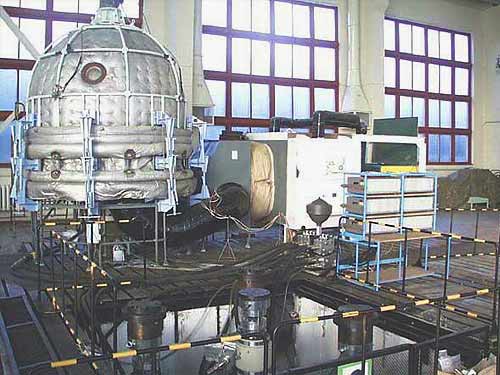
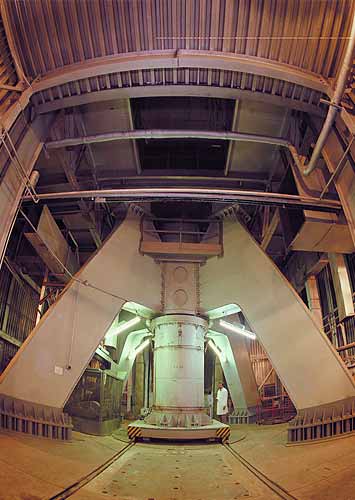
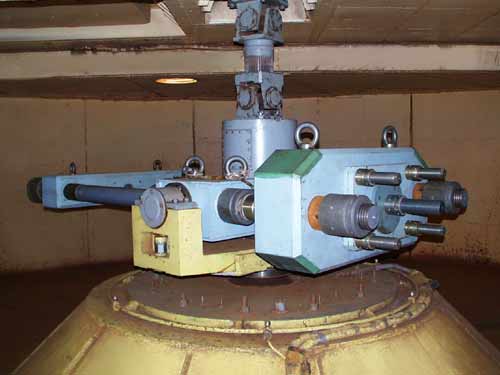
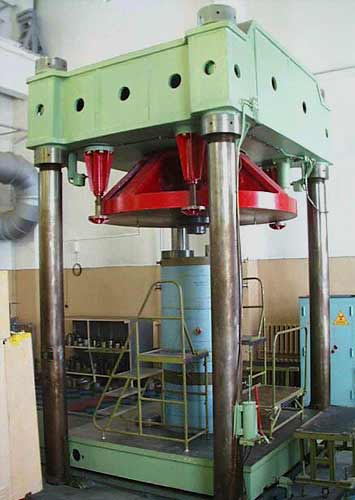
The research and test complex performs experimental testing of both military equipment from the Russian nuclear stockpile and commercial products for their strength and resistance to mechanical, thermal and climatic environments as may occur throughout their service life.
 |
 |
 |
 |
 |
Scientifically and technologically, the complex is capable of testing the properties and behaviors of structures, such as stress-strain state, relative displacements of parts and assemblies, load levels, thermal fields, structural dynamics, etc., and also items can be tested there remotely that contain explosive, radioactive and fissile materials.
The complex's test facilities are able to provide:
- static loads as high as hundreds of tons;
- shock-induced accelerations at thousands of g;
- various types of vibrational loads;
- arctic cold and tropical heat, 100%-humidity and solar radiation.
There are methodology and facilities available at the test complex that offer:
- verification of long-term warranty assurance of structures based on their accelerated tests;
- fundamental studies for physical, mechanical and radiationwise characterization of various structural materials and explosives;
- strength and leak tests of varied gas systems using hydraulics, evacuation and gas;
- high-pressure tests of structures in combination with linear, vibrational and shock accelerations;
- diagnostics of damaged structures or gas systems by X-ray radiography, ultrasound, acoustic emission, leak detection, strain gaging and other techniques;
- possible compression of hydrogen, nitrogen, argon and other gases using mobile facilities;
- conduct of the required measurements and data processing with state-of-the art measuring and computing systems.
 |
 |
 |
In testing, emphasis is placed on the safety of test items in various abnormal environments, most importantly, fire, impact and flooding.
The experimental checkout of products is based on a set of industry standards, norms of strength and the applied procedures for vibrational, inertial, thermal and climatic tests that adequately simulate the operation details and emergencies in a laboratory environment.
Vibration tests are conducted by the procedures that are based on extensive experimental evidence, so that they help conclude on the vibration resistance of various test items in diverse operation environments. The hardware and software capabilities serve well to determine lifetime and the most stressed points in the product, optimize it mechanically and predict its service life and behavior under various vibrational loads during operation.
The complex's scientists are successfully working to study the effects of shock on test items, which may also include very sophisticated and large mechanical systems as heavy as several tons. There is a suite of test facilities built and test procedures developed at the complex to conduct in-laboratory shock load experiments.
A pneumatic hydraulic shock facility is used to imitate quasi-static loads and other shock loads when the item needs to be tested with a specific shape of shock impulse and appropriate loading time.
The shock loading data are obtained using an equipment package that measures accelerations, deformations and displacements.
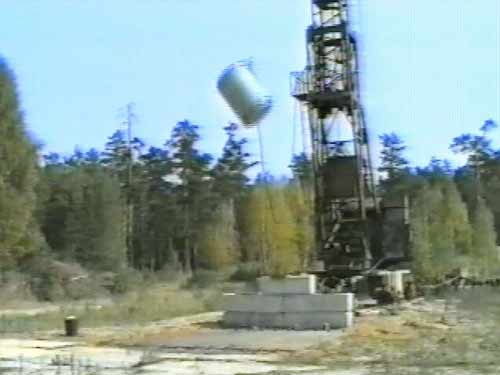
With drop test facilities, the test items varied in weight and size, including containers and packages, can be dropped from a specified height in terms of safety standards.
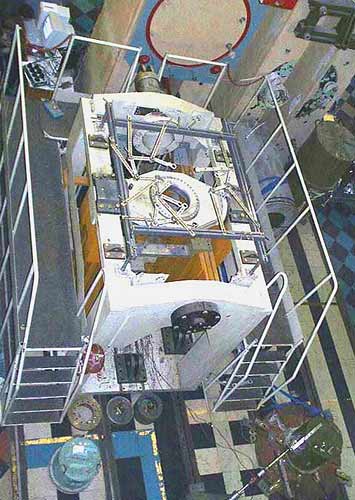
The centrifugal facility enables inertial tests for different weights of items using different orders of linear acceleration and it also provides loading at increased acceleration growth rates. The measurement package is to record deformations and displacements of the test samples.
The complex's static test facilities can provide the loading tests with recording of displacements, deformations and forces.
There is a facility at the complex, which is used for strength and leak tests of gas systems under high pressures and evacuation, static and shock loads included, for the effects of linear accelerations and angular velocities, or high pressure at a time with linear vibration or shock accelerations.
The temperature and climate chambers, with their equipment and techniques, computer-assisted control, measurement and checkout procedures, is sufficient to perform:
- temperature tests of large-size items in the range of -70 to + 300oC, and element-by-element studies in -70 to + 300oC range;
- severe thermal cycling and alternating temperature cycling tests;
- simulation of nonstandard heating by large heat flows;
- testing of items as applied to various fire accident scenarios;
- long-term climatic tests under specified temperature and humidity conditions in the range from -70 to + 180oC and 20 - 98%, respectively.
Various structures are tested for abnormal environments (drop, fire and flooding), for which purpose there is quite a variety of test facilities operating at the complex per se and on other sites within the Institute.
Based on the product requirements, size, weight and configuration, various drop test facilities are
available. To test a package with radioactive materials or explosives, a drop test system on open
ground is to be used.
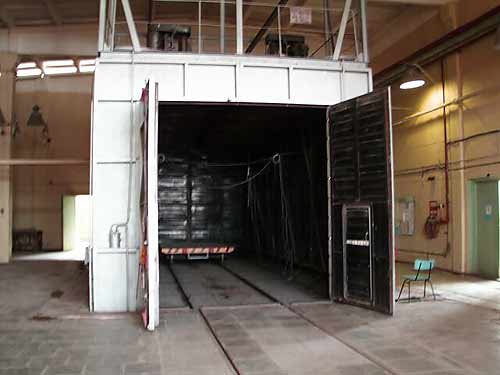
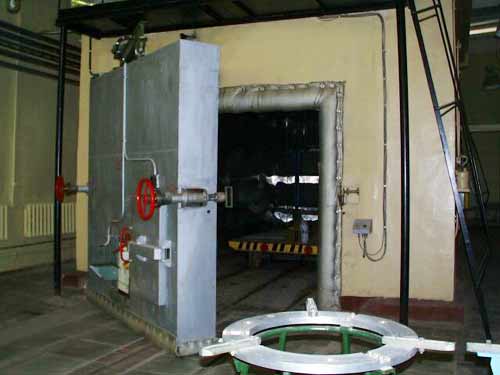
According to the IAEA requirements, the most of thermal tests for the packages are performed using tank-type facilities. Various fire scenarios can be reproduced with electroheat installations which are furnace type of design made of refractory materials. The heating media there are resistance alloys like nichrome or graphite. These installations can provide different heating rates, temperature profiles and levels.
 |
 |
 |
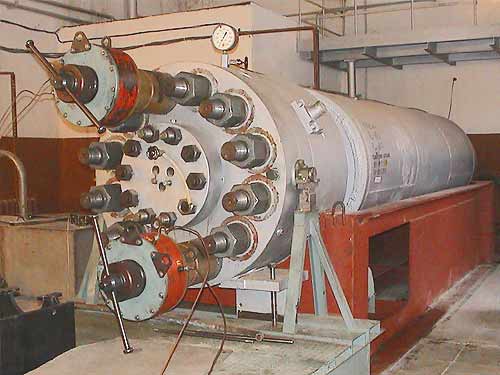
There is a hydrostatic test facility available for external hydraulic or pneumatic pressure testing of the products.
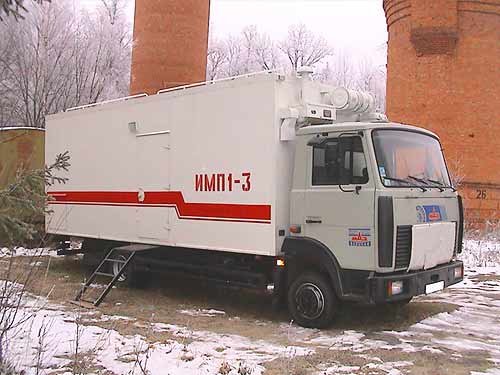
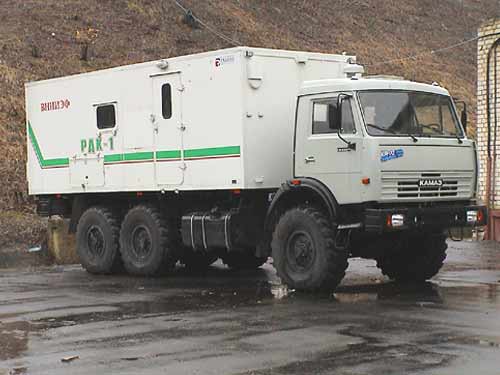
Measurement support in the tests for abnormal environments is provided by a mobile measurement system that can measure accelerations, deformations and displacements, and for initial analysis of the structural behavior, there is a mobile X-ray diagnostics package with a betatron accelerator included in it.